When an emergency strikes — a burn in the kitchen, a road accident along the Kagio–Sagana road, a child choking at dinner — the actions taken in the first five minutes often matter as much as anything doctors do later. Good first aid saves lives. Wrong first aid, sadly, can cost them. The emergency team at Kagio Hospital put together this guide to the most common emergencies we receive — what to do, and what never to do.
Burns
- Do: cool the burn under gently running clean water for a full 20 minutes. Remove rings and tight clothing near the area before it swells. Cover loosely with a clean cloth and come to hospital.
- Never: apply toothpaste, egg, soil, oil or ash. These trap heat, introduce infection and make treatment harder. Never burst blisters.
Heavy bleeding
- Do: press firmly on the wound with a clean cloth and keep pressing — continuous pressure for 10 minutes stops most bleeding. Raise a bleeding limb above heart level. Add more cloth on top if soaked; do not remove the first layer.
- Never: apply soil, leaves or powders to a wound, and do not repeatedly lift the cloth to check.
Choking
- Adult or child who cannot cough, speak or breathe: give 5 firm blows between the shoulder blades with the heel of your hand. If that fails, give 5 abdominal thrusts (grasp from behind, hands above the navel, pull sharply inwards and upwards). Alternate until the object comes out.
- Babies under 1 year: lay the baby face-down along your forearm, head lower than chest, and give 5 gentle back blows; turn over and give 5 chest presses with two fingers. Never do abdominal thrusts on a baby.
Snake bites
- Do: keep the person calm and still — movement spreads venom. Remove rings and watches, immobilise the bitten limb like a fracture, keep it below heart level, and get to hospital fast. Note the snake's appearance if safely possible.
- Never: cut the wound, attempt to suck out venom, apply a tight tourniquet, or waste time on traditional remedies. These cause severe harm and delay the one thing that works — antivenom and supportive care in hospital.
Seizures (fits)
- Do: protect the person from injury — move hard objects away, cushion the head, turn them onto their side once jerking stops, and time the seizure.
- Never: put anything in the mouth (they cannot swallow their tongue — that is a myth), restrain the jerking, or pour water on them. Come to hospital if it is a first seizure, lasts over 5 minutes, or the person doesn't fully wake.
The unconscious person
- Do: check for response and breathing. If breathing, turn them gently onto their side (recovery position) to keep the airway clear, and call for help. If not breathing, start chest compressions — hard and fast in the centre of the chest, about twice per second — and don't stop until help arrives.
- Never: give an unconscious person anything to drink, and never leave them lying on their back.
In every emergency, the sequence is the same: keep calm — make safe — give first aid — get to hospital. Save our 24/7 emergency line in your phone right now: 0797 580 065.
We are ready, every hour
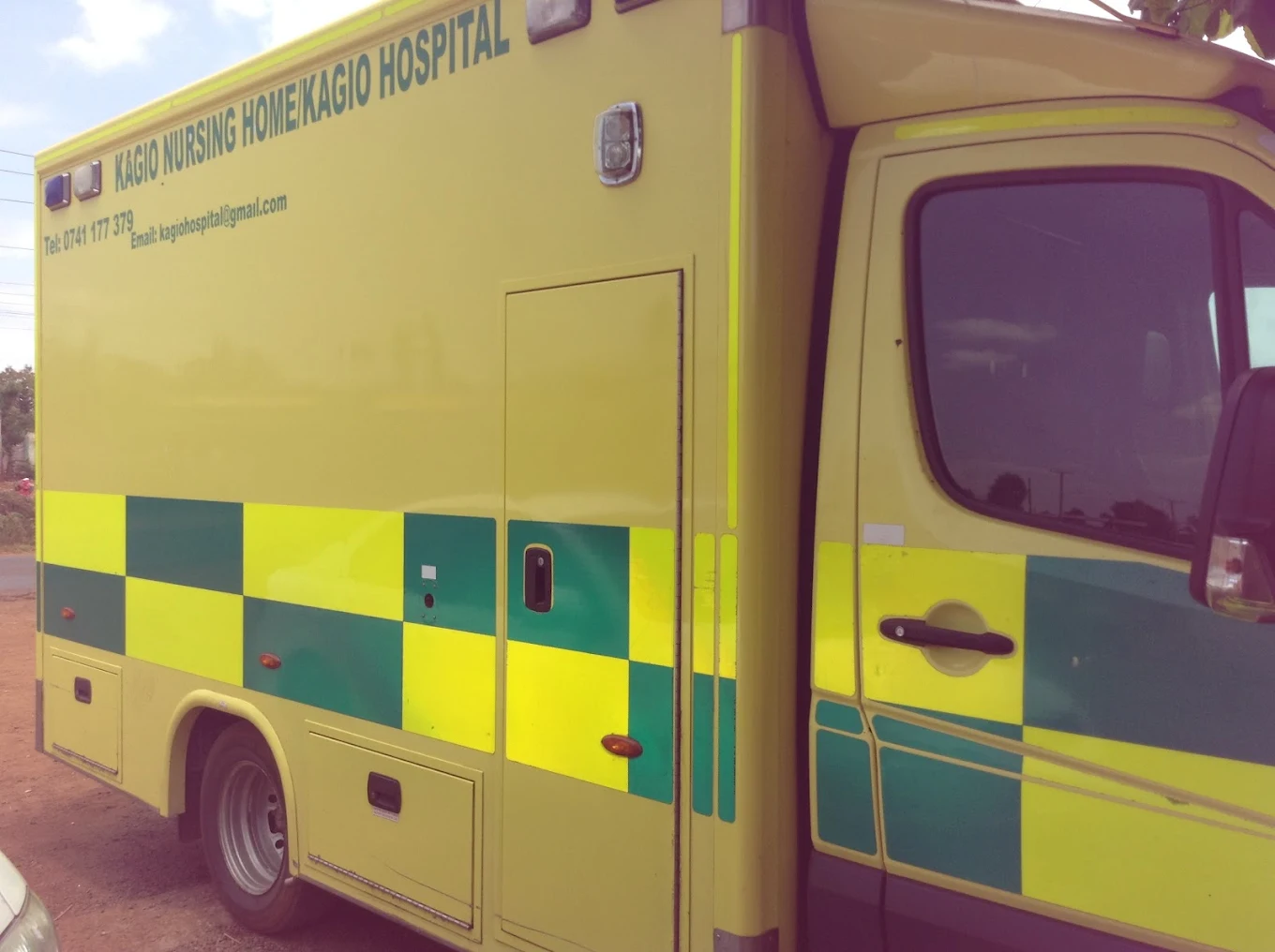
The Accident & Emergency department at Kagio Hospital runs 24 hours a day with triage, resuscitation bays, theatre, ICU and ambulance back-up. If you can't transport a casualty safely, call us — our advanced life-support ambulances respond across Kirinyaga and neighbouring counties.